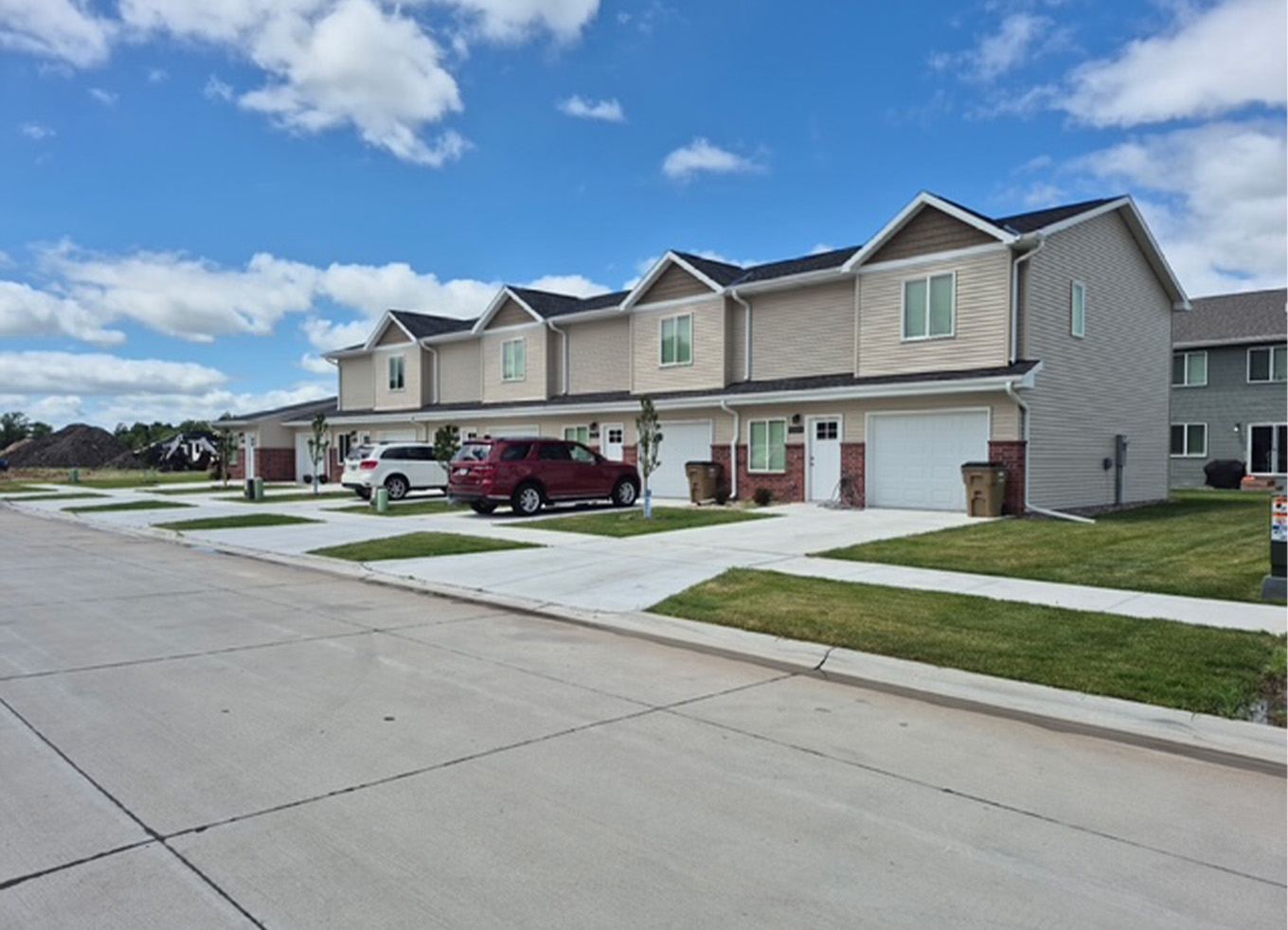
Rural CDFI Creates Affordable Housing Solutions in Two Nebraska Communities
Client: Hoppe Development
Client Location: Grand Island, NE
CDFI: Center for Rural Affairs
CDFI Service Area: Nebraska
Offering small business, food systems, housing, and clean energy loans to rural communities
When Hoppe Development set out to build affordable housing in Grand Island and Lexington, Nebraska, they confronted a challenge common across rural America: traditional lenders were unwilling to finance projects with tight margins, layered public grants, and complex capital stacks.
Both developments were designed to fill critical workforce housing gaps. The Grand Island project would serve the city’s growing immigrant and refugee population, which makes up 16.6% of local residents. The Lexington project would help retain and attract workers for local small businesses.
To proceed, Hoppe needed a mission-aligned partner who understood both the financial and community realities of affordable rural housing. That partner was the Center for Rural Affairs (CFRA). Introduced by the Center for Immigrant and Refugee Advancement, Hoppe found in CFRA a lender capable of delivering responsive, flexible capital designed around community needs.
CDFIs Are Willing to Build Where Others Won’t
Traditional lenders often avoid construction financing for affordable housing, citing complex funding structures, perceived risk, and the limited profit potential that comes with keeping rents attainable. But CFRA saw an opportunity to invest in long-term community stability. CFRA provided $3.256 million in loans to help bring both developments to life.
Hoppe Development turned to CFRA because of its ability to tailor financing around community-driven solutions. “Center for Rural Affairs has been a thoughtful partner in understanding the housing needs of communities, and how they can provide creative and flexible capital solutions to catalyze housing projects,” said CEO Jake Hoppe.
A Commitment to Long-Term Rural Development
The Grand Island and Lexington projects come at a critical moment. Nebraska currently faces a statewide housing shortage that directly threatens economic competitiveness. Nearly every county struggles to provide housing for residents earning 70–120% of area median income—people who earn too much for assistance yet cannot find affordable options. Without sustained investment, many rural communities risk declining neighborhoods, restricted economic growth, and negative impacts on health and educational outcomes.
Hoppe and CFRA’s partnership demonstrates what is possible when mission-driven developers and CDFIs work side by side. Rural communities gain not just new housing, but new opportunities to grow, attract workers, and thrive.
How CDFIs are Helping Nebraska Communities
From 2005-2022, CDFIs in Nebraska have provided:
- 40,529 jobs created or maintained
- 2,035,960 square feet of commercial space developed
- 3,287 housing units developed
- 31,373 microenterprises and small businesses financed
- 6,541 consumers with access to affordable responsible financial services reached
Visit our healthy communities page and small business page to learn more about how OFN and our network of CDFIs invest in these priorities.
Are you an OFN member CDFI with a great borrower story to share?
Your client success stories illustrate what it means to deliver opportunity for all. They help OFN demonstrate how CDFIs work to help create good family-wage jobs, decent affordable homes, healthy foods, greener neighborhoods, and so much more.
Stay Connected with OFN
Subscribe to receive regular updates straight to your inbox and check out our blog for the latest coverage from OFN and the CDFI industry.
Follow us on social media.