CDFI’s Critical Role In Curbing the Affordable Housing Crisis
Through flexible funding, supportive coaching, and long-term investment, CDFIs are transforming local affordable housing options in markets where traditional finance has stalled.
Read time: 6 minutes
The affordable housing crisis is not just hurting families; it’s negatively impacting the strength and stability of communities across the United States. High interest rates and constrained construction financing have stalled production, and the shortage is severe, with nearly seven million units still needed for extremely low-income families. Of those families who do manage to secure housing, 70% are paying more than half their income on rent.
CDFIs are well-equipped to create affordable housing opportunities. As traditional lenders have pulled back from long-horizon deals, CDFIs open doors to increase housing inventory. They provide adaptable funding opportunities that center community growth and economic security—and they do it for communities that are often overlooked.
Affordable Housing Flourishes With Flexible Funding
When it comes to affordable housing, CDFIs provide flexible, responsible capital and long-term investment to serve low-income families, first-generation homebuyers, and communities that have been historically underserved by private development.
CDFIs’ impact on the affordable housing crisis is clear and strong. In 2024 alone, CDFIs helped communities and developers create or rehabilitate 98,451 affordable housing units. Since our start, our members have supported nearly three million of these essential units.
Our network uplifts affordable housing through flexible funding, technical assistance, and long-term investments. This unique and impactful foundation helps developers and communities preserve rental units, finance new construction in underinvested communities, and support local economies.
Early-Stage Capital Unlocks Senior Housing in Maine

Avesta Housing, a Maine-based developer, was determined to answer the call for affordable housing for local senior residents. To do so, it first identified a three-acre site in Westbrook for an energy-efficient senior housing project. Securing the space in a competitive real estate market and financing a complex build are exactly the kinds of challenges that limit access to conventional construction capital.
Avesta turned to Genesis Community Loan Fund, an OFN member CDFI that shares its commitment to investing in this area. Genesis provided early-stage investment, which gave Avesta enough time and resources to build a project that answered both human and environmental needs.
“Genesis is proud to join CDFIs across the country that are exemplifying the power of flexible, mission-driven financing to build clean energy solutions and climate resilience into affordable housing and other critical community facilities,” said Liza Fleming-Ives, Executive Director at Genesis.
Ultimately, the Maple Grove Elderly Housing project will provide 60 energy-efficient units for approximately 90 seniors. The work will also create 667 local construction jobs, additional property management roles, and attract $22.6 million in community investment. It’s a project that illustrates what happens with CDFI investment: communities thrive, businesses grow, and economies expand.
Bringing Security to Rural Affordable Housing in Nebraska
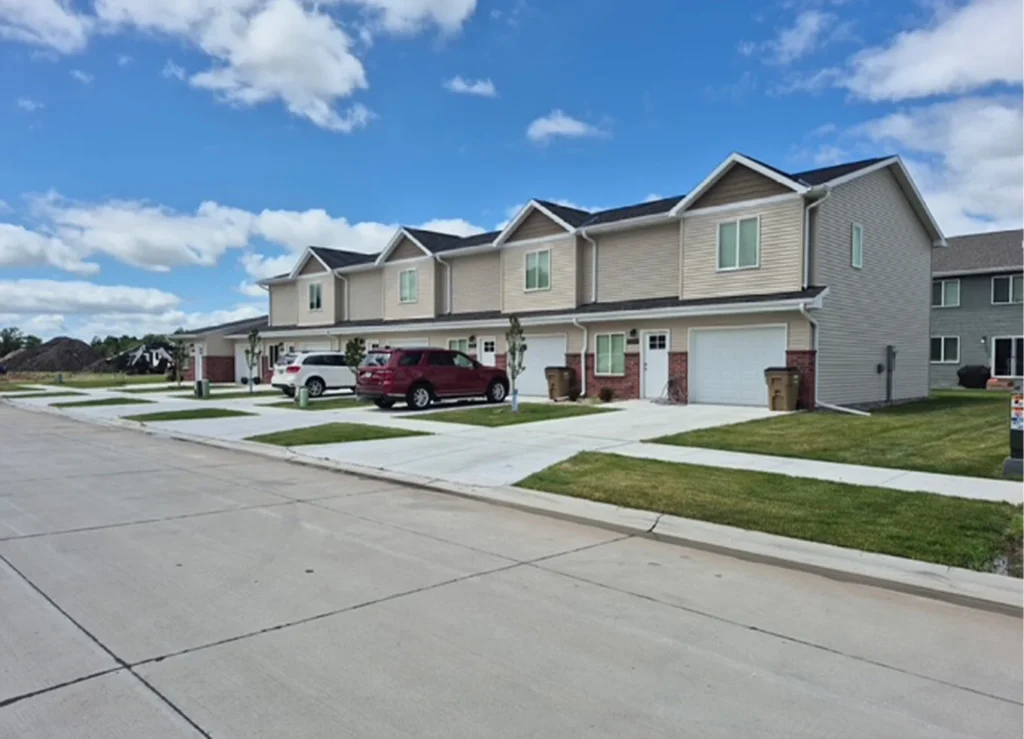
Nebraska is currently facing a statewide housing shortage, with nearly every county struggling to provide housing for residents earning 70–120% of the area median income. These residents make too much to qualify for assistance but still can’t find affordable options, highlighting the far-reaching ramifications of this predicament.
A similar gap exists in affordable housing finance. Affordable housing projects help sustain local economies, but traditional lenders often reject these ventures. They cite worries around complex funding structures, perceived risk, and limited profits. However, like many CDFIs, the Center for Rural Affairs (CFRA) has stepped in to help address these financing gaps. When Hoppe Development sought to build two developments in Grand Island and Lexington, Nebraska, it partnered with CFRA, which provided responsive, flexible capital centered on community needs.
Affordable housing in rural communities provides a lifeline for families. Without it, neighborhoods decline, economies shrink, and health and educational outcomes fall. With investments from CDFIs, these critical community markers have a path to rise.
Federal Impacts on Affordable Housing
Affordable housing development doesn’t exist in a vacuum. Federal policy changes, tax credits, and financing programs all impact how these projects materialize around the country.
Last year’s enhancements to the Low-Income Housing Tax Credit are one example of how federal policy can expand housing opportunities, and our network has been leveraging these tools to support projects in previously underinvested communities. By increasing the 9% housing credit allocation to 12% and reducing the bond-financed threshold from 50% to 25%, the changes are expected to help finance an estimated 1.22 million additional affordable rental units over the next decade.
Currently, major housing legislation continues moving through Congress. The House and Senate are working on the bipartisan 21st Century ROAD to Housing Act, a comprehensive housing package focused on expanding homeownership opportunities and streamlining federal housing programs. Several proposals under consideration would strengthen the role of community-based lenders, including portions of The Access to Fair Financing for Opportunity and Resilient Development (AFFORD) Act, which would improve the CDFI Bond Guarantee Program, support a secondary market for CDFI loans, and expand access to capital through initiatives like the Native CDFI Relending Program.
Finally, the Capital Magnet Fund supports the construction and rehabilitation of affordable housing nationwide and is projected to help finance more than 100,000 affordable homes. Advocates for affordable housing investment, including OFN, continue to advocate for the release of previously appropriated funds to help build and preserve affordable housing across the country.
The affordable housing crisis is a pressing issue for the country, but it’s one that can be addressed through thoughtful policy, strong community partnerships, and flexible financing opportunities. CDFIs are essential to these efforts, and our network consistently demonstrates how the right funding and support can help expand housing opportunities, strengthen local economies, and build more resilient communities.
Learn more about how CDFIs support affordable housing and local economies.
Save the Date

Join us from October 20-23 in New Orleans, LA for the 42nd annual OFN Conference!
Stay Connected
Subscribe to receive regular updates straight to your inbox and check out our blog for the latest coverage from OFN and the CDFI industry.
Follow us on social media.
More From OFN
-
House Appropriations Committee Approves $276.6 Million for CDFI Fund for FY27
The Committee maintains its funding proposal from previous years and directs all previously appropriated CDFI funding to be promptly obligated… Read More
-
Remaining $289 Million in FY25 Funds Released for the CDFI Fund, Treasury Announces Award Reforms
Following consistent advocacy from OFN in partnership with congressional champions, allies, and member CDFIs, the Office of Management and Budget… Read More
-
New Research Evaluates OFN’s Flagship Financing Program
To better understand the impact of its financing program, OFN has released a new report with interim findings from a… Read More